Quick Answer:
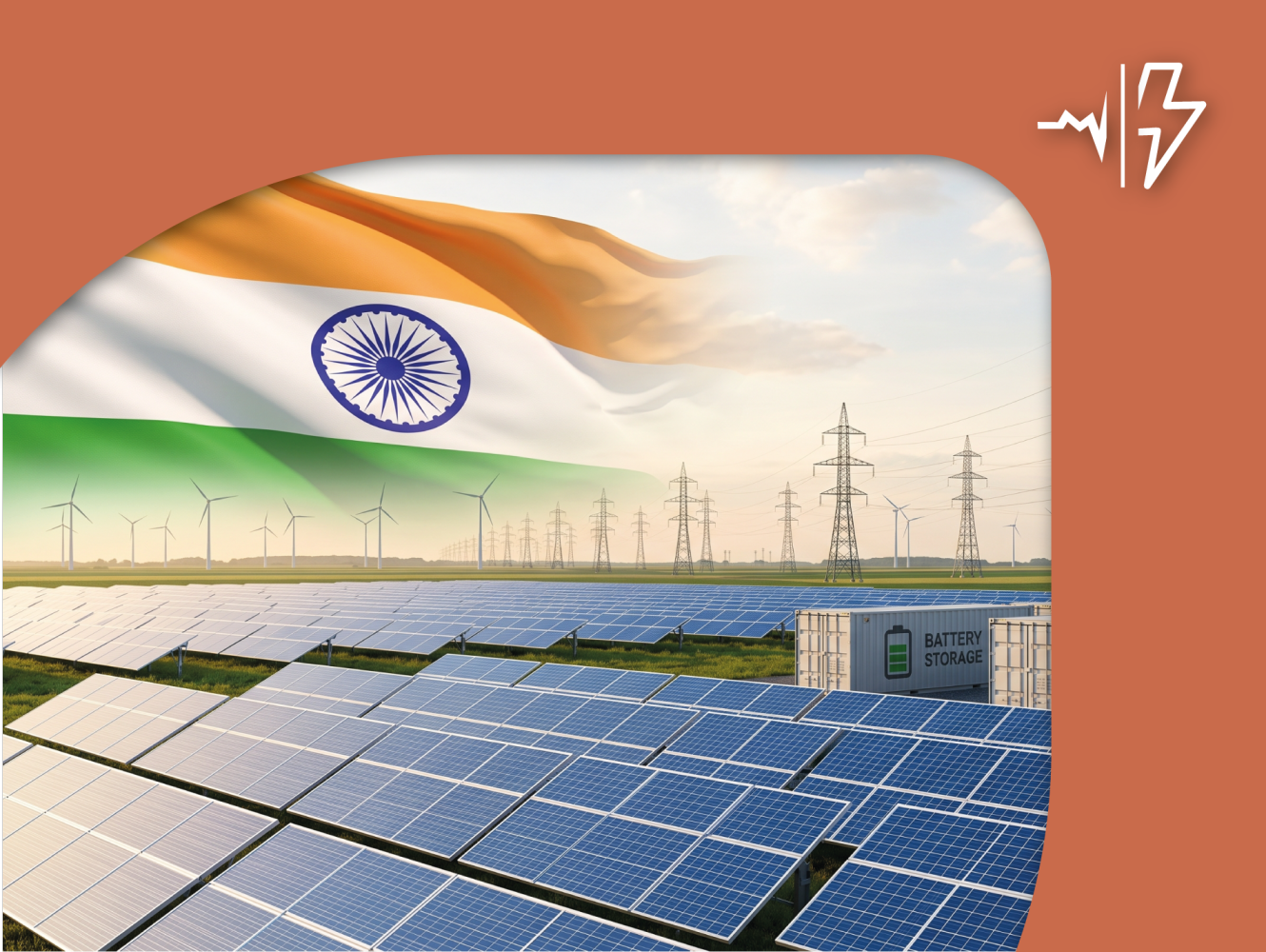
India’s Cabinet has approved a massive ₹1.86 trillion ($19.42 billion) investment for the Green Energy Corridor Phase-III (GEC-III) scheme. The funding will upgrade intra-state transmission grids to evacuate 135 GW of clean energy and includes a ₹500 billion incentive for deploying 50 GWh of Battery Energy Storage Systems (BESS). This initiative aims to solve grid congestion and push India toward its goal of 500 GW of non-fossil fuel capacity by 2030.
Breaking Down the ₹1.86 Trillion Investment
The latest approval addresses one of the biggest bottlenecks in the clean energy transition: transmission and storage. Building solar and wind farms isn’t enough if the grid cannot handle the variable power output.
Here is exactly how the ₹1.86 trillion ($19.42 billion) is allocated:
| Sector | Investment | Purpose |
| Intra-State Transmission (InSTS) | ₹1.36 Trillion | Upgrading grid infrastructure to evacuate 135 GW of renewable energy across states. |
| Battery Energy Storage (BESS) | ₹500 Billion | Deploying 50 GWh of battery storage to address intermittency and peak-hour curtailment. |
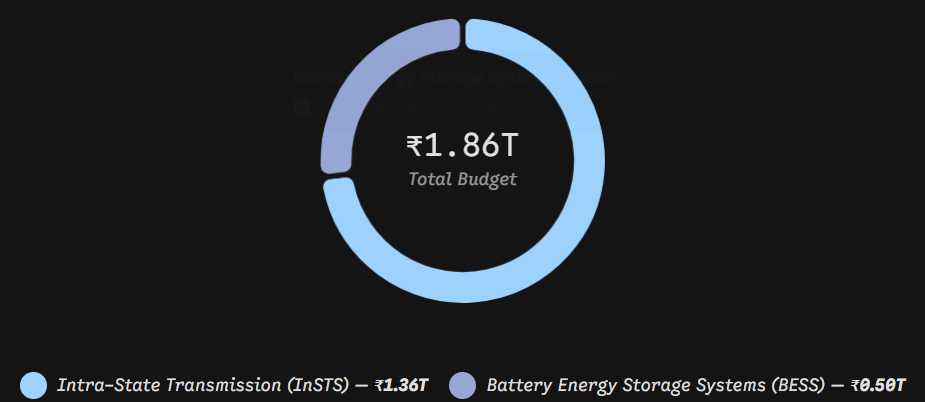
Key insight: The massive allocation for Battery Energy Storage Systems (BESS) proves that the government is actively shifting focus from merely generating power to ensuring grid stability during non-solar hours.
Why Grid Modernization and BESS Matter
Grid modernization improves the ability to integrate variable solar and wind generation, reduces curtailment, and enhances reliability. A significant issue with solar power is that peak generation happens mid-day, while peak energy consumption usually occurs in the evening.
The ₹500 billion set aside for 50 GWh of battery storage allows power generators to store surplus clean electricity generated during the day and release it when demand spikes. This minimizes wasted energy and prevents grid congestion.
Impact on Commercial Real Estate and Net-Zero Building Solutions
For developers and enterprises focusing on Net-Zero building solutions, this upgraded infrastructure is a game-changer. Enhanced grid flexibility means that commercial facilities utilizing Building-Integrated Photovoltaics (BIPV) and smart film technologies can more efficiently feed surplus daytime energy back into the state grids.
Previously, grid congestion often deterred large-scale commercial solar integration. With the Phase-III upgrades and robust battery storage networks, ROI models for commercial BIPV manufacturing plants and B2B energy solutions become highly attractive, as the grid can now reliably accept and store locally generated solar output.
The Road to 2030
India currently operates roughly 304 GW of non-fossil fuel power capacity. To hit the ambitious target of 500 GW by 2030, the country needs to sustain an aggressive expansion rate.
This $19.4 billion package is designed to unlock larger private and institutional investments by lowering the upfront risk of transmission bottlenecks. By public funds absorbing the cost of grid modernization, private investors can focus purely on generation capacity.
Frequently Asked Questions (FAQ)
What is the Green Energy Corridor Phase-III (GEC-III) scheme?
It is an Indian government initiative aimed at strengthening the Intra-State Transmission System (InSTS) to seamlessly integrate 135 GW of renewable energy into the national grid.
How much is India investing in renewable energy storage?
The Indian cabinet has announced a ₹500 billion incentive scheme specifically for the installation of 50 gigawatt-hours (GWh) of battery energy storage systems (BESS).
Does the $19.4 billion directly build new solar farms?
No. The funding primarily targets grid upgrades, transmission networks, and energy storage. This infrastructure makes it viable for private investors to build new solar and wind farms without fearing grid congestion.
What is India’s clean energy target for 2030?
India aims to achieve 500 GW of non-fossil fuel-based power capacity by the year 2030, up from its current capacity of around 304 GW.